
Share the page
Economic Inclusion and Inequality

This research program examines the conditions under which public and private sector investments — in value chains, infrastructure, and more — can become genuine levers for reducing inequality and improving living conditions for the most vulnerable populations.
The main challenge
Inequality is not only a matter of social justice: it weakens economies, slows growth, and threatens the stability of financial systems. This finding, now firmly established, has a direct implication for development actors: the impact of funded projects will remain limited as long as high levels of inequality persist.
Our approach
This program builds on a solid body of research developed over several years on the various dimensions of inequality and their implications. From inequality of income and opportunity to vulnerability and poverty, including social mobility, these studies have helped understand societal dynamics, the role of public policies, and interactions with other challenges such as climate change. The current program extends this foundational work by taking a more operational approach: under what conditions can investments, whether public or private, become effective levers for reducing inequality?
The program is structured around three main areas of research:
- Fiscal, trade, social, and regulatory policies: For public authorities, what pre-distribution and redistribution levers can promote a more equitable distribution of wealth?
- Infrastructure: How can the location, design, and governance of infrastructure improve access to essential services, create economic opportunities, and strengthen the resilience of territories? Conversely, in what cases do they deepen territorial divides?
- Industrial and productive dynamics: Under what conditions do industrialization and the emergence of new sectors help create jobs, support productive upgrading, and ultimately enable more territories to take part in value creation?
By drawing on a range of experiences, the program helps structure dialogue between governments on inequality reduction strategies; it also helps inform policy formulation and the design of international cooperation instruments aimed at strengthening economic inclusion and the sustainability of investments.
Why is this a priority for AFD?
This research program concretely supports AFD Group's ambition to finance projects whose benefits are equitably shared and that create opportunities for everyone. From project design through to evaluation, it provides tools and analyses to help ensure that each investment effectively contributes to reducing inequality.
Our tools
AFD relies on specific tools and methods to better analyze inequality and respond more effectively through public policy recommendations and development strategies:
The multidimensional inequality diagnostic is a tool developed by AFD and the African Centre of Excellence for Inequality Research (ACEIR). Drawing on available data, it examines the different dimensions of inequality within a country to help policymakers identify priorities for reducing inequality. AFD has supported the implementation of this tool in South Africa, in Ghana, in Kenya, in Colombia and Indonesia.
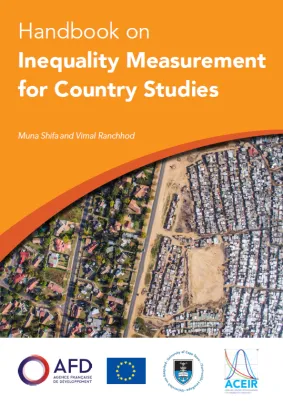
To compare studies and facilitate the preparation of diagnostics, a handbook was developed by ACEIR. Its 2025 updated version includes a new chapter on inequalities related to climate change and environmental factors.
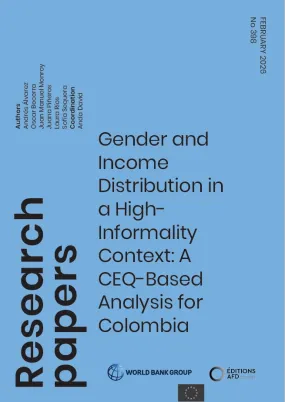
The fiscal incidence analysis has been developed by the Commitment to Equity (CEQ) Institute to analyze the impact of taxation and social spending on inequality and poverty. It enables governments to identify the most effective fiscal and social policies for reducing poverty and inequality.
The analysis was carried out in five countries (Morocco, South Africa, Cameroon, Kenya, and Senegal) with the support of AFD and the Global Development Network (GDN), in partnership with the CEQ Institute and partners in each country.
Distributional impact analysis makes it possible to assess who benefits from development interventions and the extent to which they contribute to reducing inequality.
Developed as part of the European Union's “Inequality Marker” (I-Marker), the DIA and DIA+ methodologies measure, ex-ante or ex-post, the contribution of development cooperation projects to reducing inequality. The DIA methodology focuses on the socio-economic profile of beneficiaries based on wealth and living-condition indicators, while the more recent DIA+ approach complements this analysis by positioning beneficiaries within the income or consumption distribution.
Together, these tools provide a scientific measure of the distributive profile of development interventions and strengthen the capacity of development finance institutions to integrate inequality issues into the design, implementation, and evaluation of projects.
Our flagship initiatives
Explore our flagship initiatives:
The European Union and AFD have both made tackling inequalities a priority. Against this backdrop, the two institutions began working together on reducing inequalities by establishing the EU-AFD Research Facility on Inequalities in 2017:
- During the first phase of the Facility (2017-2020), 22 research projects were carried out in 32 countries to improve understanding of socioeconomic inequalities, their drivers, effects and dynamics. Some one hundred research papers and policy briefs were published, feeding into the academic debate and initiating national dialogues on inequalities in the countries concerned.
- Building on the success of this first phase, the Extension of the EU-AFD Research Facility on Inequalities was launched in 2021. From 2021 to 2025, it focused on supporting the design of inequality-reduction policies in four partner countries: South Africa, Colombia, Indonesia and Mexico.
- The third phase of the EU-AFD Facility on Inequalities (2026-2028) now takes a more operational approach: it aims to demonstrate how investments – particularly in private- and public-sector infrastructure – can make a tangible contribution to reducing inequalities. The objective is to strengthen the effective mainstreaming of inequality reduction into Global Gateway investments, in line with the I-Marker, the European Union’s inequality marker.
In the long term, this program, grounded in research and capacity building, will enable partner countries and development actors to better understand inequality dynamics and to respond to them more effectively through public policy.
This action-research project assesses the impact of the strategies implemented by the Universal Health Insurance Authority (UHIA) to better include informal-sector workers in Egypt's health insurance system. The aim is to identify the barriers limiting their enrollment in the existing system (awareness of and trust in the scheme, financial constraints, administrative difficulties, etc.) and to propose information and outreach strategies to overcome them. The goal is to inform the design of an AFD-funded project to scale up the health insurance program in Egypt.
AFD funds several action-research projects aimed at better understanding the social and distributional effects of climate policies so that low-carbon transitions contribute fully to reducing inequality:
- In South Africa, the work focuses on the impact of a just energy transition in coal-dependent territories, particularly the Mpumalanga region; it combines economic modeling, field surveys, and the development of multidimensional inequality indicators to inform public policy and monitoring and evaluation systems.
- In Mexico, the project supports the implementation of the new climate plan (NDC) by analyzing its social, territorial, and occupational implications; it also examines social protection mechanisms and climate risk transfer or retention mechanisms.
The shared goal is to identify the populations, sectors, and territories most exposed, to document the conditions for a genuinely just transition, and to formulate operational recommendations for more systematically integrating inequality issues into climate action.
Our key resources
Explore our key resources:
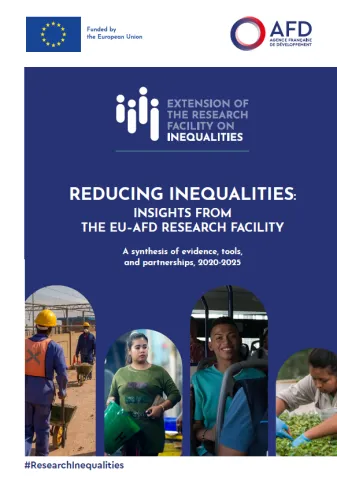
This summary provides more information on the lessons learned, tools, and partnerships developed under the Facility from 2020 to 2025, structured around three key questions:
- What social and fiscal policies can reduce inequality?
- How can social and fiscal policies be adapted to reduce inequality in the context of the ecological transition?
- How can sustainable energy transitions and environmental policies be designed through the lens of inequality reduction?
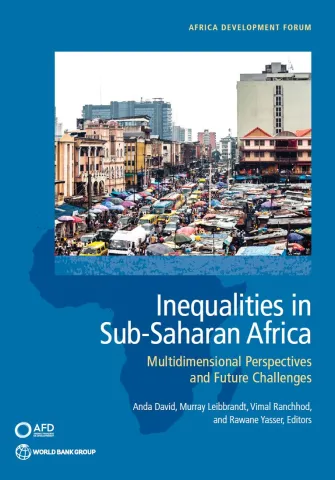
Rising inequality is a major obstacle to sustainable development, and it is in this context that this book, Inequalities in Sub-Saharan Africa: Multidimensional Perspectives and Future Challenges (co-published with the World Bank) contributes to ongoing debates by offering an in-depth analysis of the current challenges and future outlook for inequality on the African continent.

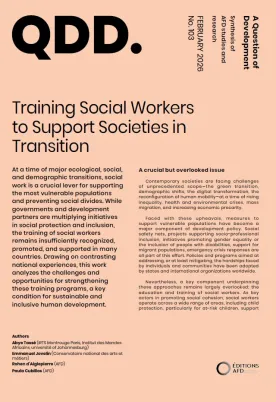
Our research projects
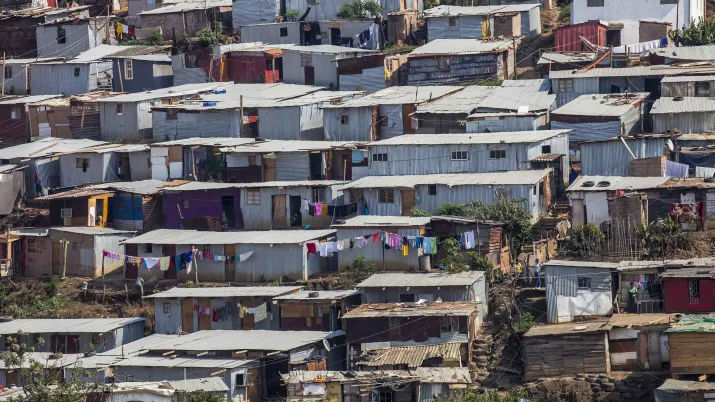

Analysis of Colombia’s fiscal policy and public spending impact on inequalities
Completed
2022 - 2023

Our replays & videos

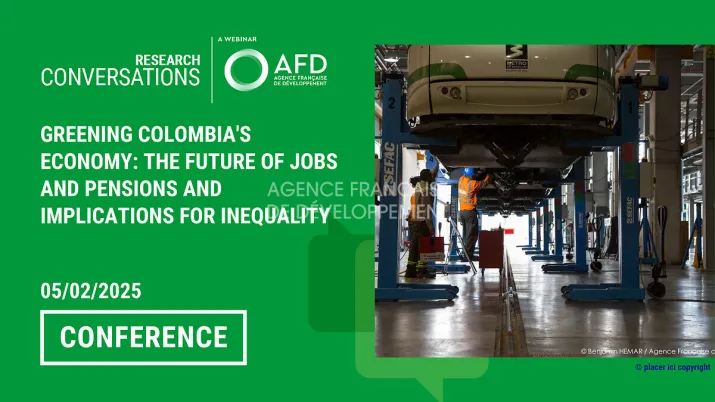
Our research team
-
Anda DAVID
Economist, scientific coordinator of the EU-AFD Facility on Inequalities

-
Serge RABIER
Research Officer, Social Demographer

-
Cecilia POGGI
Research Officer